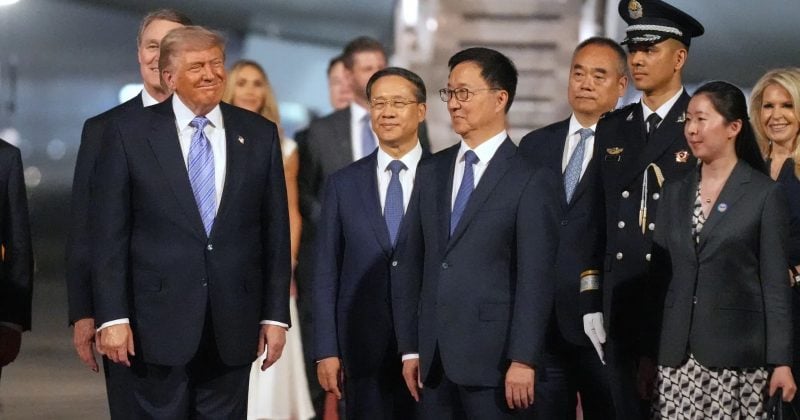
Trump is arriving in the Chinese capital with 17 top American executives for a two-day summit that touches everything from semiconductors to soybeans.
The delegation includes Apple CEO Tim Cook, Tesla’s Elon Musk, and Nvidia chief Jensen Huang, along with high-ranking officials.
What’s on the table
The core agenda centers on extending a trade truce established in October 2025. That agreement temporarily suspended significant tariffs on Chinese goods and included adjustments to China’s export controls on rare-earth minerals, the kind of materials that are essential for electric vehicles, advanced electronics, and a range of other technologies the US would rather not depend on Beijing for.
China controls the vast majority of global production of rare-earth minerals, which gives it leverage that no amount of tariff posturing can fully neutralize.
Trump’s team is expected to push for increased Chinese purchases of US products across three key sectors: aircraft, agriculture, and energy. In return, the US side is reportedly seeking relief from restrictions on American chipmaking equipment exports to China.
Beyond trade, the summit agenda also includes discussions on Taiwan and Iran.
The ‘Board of Trade’ proposal
One of the more novel ideas reportedly on the agenda is a proposed US-China “Board of Trade.” The concept would create a joint mechanism to regulate commerce in non-sensitive goods, essentially building a framework for the two economies to keep doing business in mundane product categories while continuing to fight over the high-stakes stuff like AI chips and military technology.
Apple assembles the majority of its products in China. Nvidia’s chips are at the center of the AI boom but face strict export controls to Chinese buyers. Tesla operates a massive factory in Shanghai.
Why crypto should be paying attention
Cryptocurrency isn’t on the formal agenda. But the topics that are being discussed — AI infrastructure, semiconductor policy, export controls, rare-earth access — all feed directly into the macro conditions that shape digital asset markets, including investment channels utilized by American asset managers to engage with digital assets.
The October 2025 truce already demonstrated this dynamic. Markets broadly rallied when tariffs were suspended, and crypto was no exception.
For investors in the digital asset space, the key variables to watch are: whether the trade truce gets extended and on what terms; any changes to semiconductor export policy, which directly affects AI development timelines; and the rare-earth mineral situation, which has downstream effects on hardware costs for mining and data centers.