Key Takeaways
- Sean Assaf revealed how local-first AI brings CRM tasks directly into Telegram.
- Automating pre-deal tasks reduces 100% of tedious manual CRM logging without risking user conversation privacy.
- By 2026, Assaf foresees developers building team layers to transform Telegram into an enterprise operating system.
Removing the Middleman to Preserve Privacy
Every day, thousands of business development executives, venture capitalists, and ecosystem leaders engage in a tedious, two-step routine. First, they conduct high-stakes partnership discussions inside messaging apps like Telegram. Then, they jump out of the conversation, open a separate browser tab, log into a customer relationship management (CRM) dashboard, and manually retype a summary of what just transpired.
It is a fundamentally broken workflow—one where crucial deal context gets lost, pipeline data decays, and user privacy is routinely compromised by middleman tools attempting to bridge the gap.
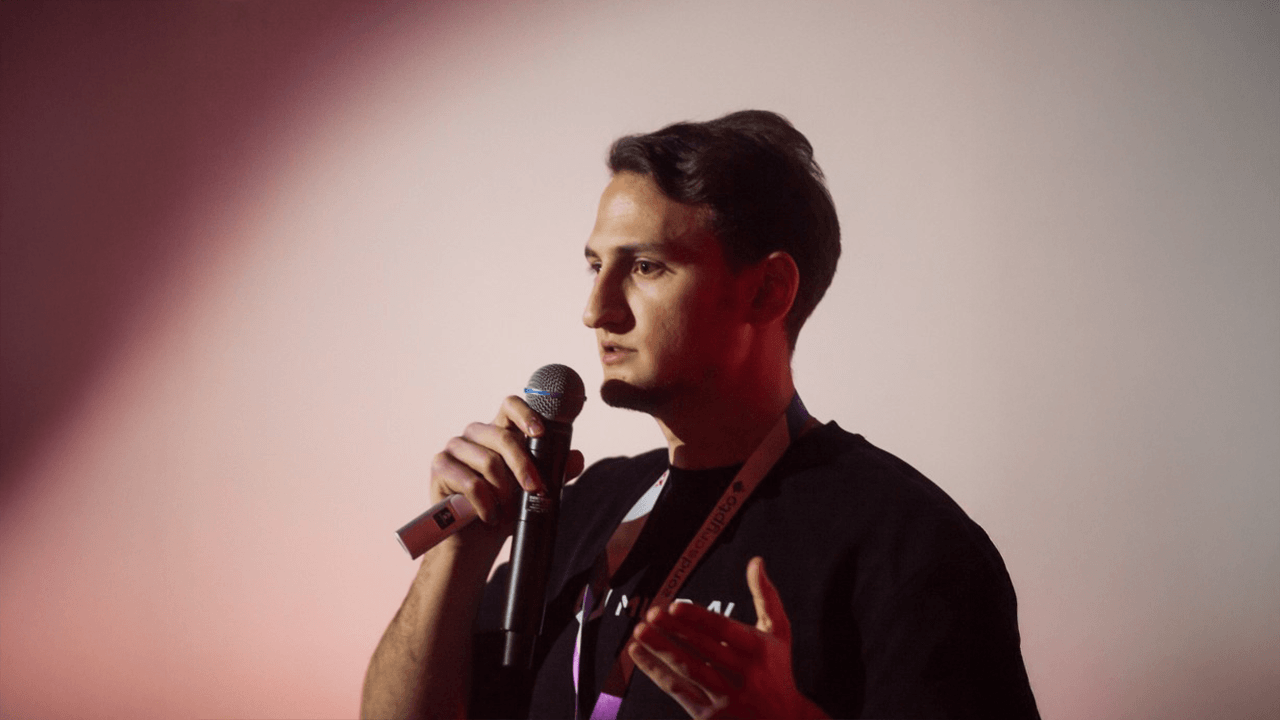
For Sean Assaf, Head of Business Development at Telebiz, the issue is not a shortage of software; it’s an outdated paradigm. With a background in economics and experience as a Web3 project founder, Assaf sees a major structural shift on the horizon: enterprise operations are leaving standalone software dashboards behind and moving directly into chat applications where modern deals are actually done.
A major roadblock in bringing artificial intelligence (AI) into enterprise sales has always been security. Advanced AI models require deep context to be useful, but feeding unencrypted client conversations into third-party cloud servers presents a massive liability. Assaf argues that this friction comes down to flawed software design rather than an inherent limitation of AI.
“Most tools sit between you and your messages—they ingest your chats onto their servers, process them, and hand back an output,” Assaf explains. “Once you accept that shape, you are choosing between usefulness and privacy, because the vendor has to hold your content to be useful.”
Telebiz takes a different approach by running locally in the browser as a client, connecting directly to Telegram’s servers. When an AI feature reads a thread for context, the request routes straight from the user’s browser to their chosen model provider.
“Nothing routes through us,” Assaf emphasizes. “What we store is the business layer, not the conversation: encrypted chat IDs, the mapping between a chat and a HubSpot deal, follow-up rules, and timestamps. Encrypted with per-organization keys. So the AI gets deep context, and we get none of it.”
Why the SaaS Dashboard Is Becoming Obsolete
By embedding CRM functionality directly into the messaging surface, platforms like Telebiz challenge the very necessity of traditional B2B software-as-a-service (SaaS) dashboards.
“I think dashboards survive as places you go to look at things, and stop being places you go to do things,” Assaf observes.
He points out that manual CRM entry was only ever a workaround for software’s historical inability to understand human dialogue. “Once the system can read the exchange and act on it, the data entry layer has no reason to exist. The data gets better because it is captured where it happened rather than reconstructed from memory an hour later.”
While visual reporting and high-level analytics will likely remain on dedicated screens, Assaf envisions day-to-day operations moving entirely into the tools teams already live in—which, for a massive swath of modern tech and digital finance, is Telegram.
As AI communication tools gain traction, many teams fall into the trap of over-automating, blasting out robotic outreach that damages trust in relationship-driven industries like venture capital and Web3. Assaf notes that generic automated messages fail not because a machine generated them, but because the sender lacked a real reason to reach out.
“In this industry, the recipient list is small—maybe a few hundred people who genuinely matter for any given partnership thesis, and most of them already know each other,” Assaf says. “Blasting that group does not scale your outreach; it burns it, and you only get to do it once.”
Instead of using AI to generate higher message volume, Assaf points to timing and context monitoring as the sweet spot. AI excels at flagging key external triggers—such as a partner announcing a funding round, launching a mainnet, or hiring a new executive—enabling humans to step in at the precise moment a message is welcome.
The Rule for Automation: Never Automate the Decision
To navigate this line, Assaf follows a simple operational framework:
“Automate everything that happens before and after a decision. Never automate the decision.”
Retrieval, thread summaries, drafting options, logging agreed terms, and chasing cold follow-ups are administrative tasks that shouldn’t consume a dealmaker’s focus. But the actual decision to reach out, negotiate, or close must remain strictly human. “Teams automate the outreach, which is sensitive, and hand-update the CRM, which is not,” Assaf notes. “Reverse it, and both halves get better.”
As Telegram expands its technical ecosystem through native apps and infrastructure, Assaf believes the single biggest unmapped opportunity for developers isn’t better AI chatbots, but rather fixing structural gaps in how teams work together.
“Telegram is built for individuals, but business is a team sport,” Assaf says. “There is currently no shared context, no ownership of a relationship, and no clean handoff when someone leaves. That whole layer is missing, and almost nobody is building it.”
By bridging local-first AI, automated administrative pipelines, and collaborative team tools directly inside the chat interface, the future of enterprise software may not look like a complex dashboard at all—it might just look like a typical inbox.