Key Takeaways
- Pompliano classified the Coldcard event as a third-party failure.
- Verified losses surpassed 1,360 BTC, valued at more than $86 million.
- The incident could deepen fear across an already bearish market.
Pompliano Challenges the ‘Bitcoin Was Hacked’ Narrative
Bitcoin investor and entrepreneur Anthony Pompliano addressed the Coldcard security incident on Aug. 2, warning that inaccurate descriptions could distort investor understanding during fragile market conditions. His remarks framed the episode as a hardware-wallet failure involving user funds, rather than a compromise of Bitcoin’s network, consensus rules, or transaction ledger.
Pompliano cautioned that mainstream media could eventually reduce the incident to a “Bitcoin was hacked” storyline, even though the issue stemmed from third-party wallet technology rather than the Bitcoin protocol. He argued that misleading descriptions could undermine investor confidence during an already difficult period for digital assets.
He wrote:
“Obviously Bitcoin was not hacked and there is no known security vulnerability with the protocol.”
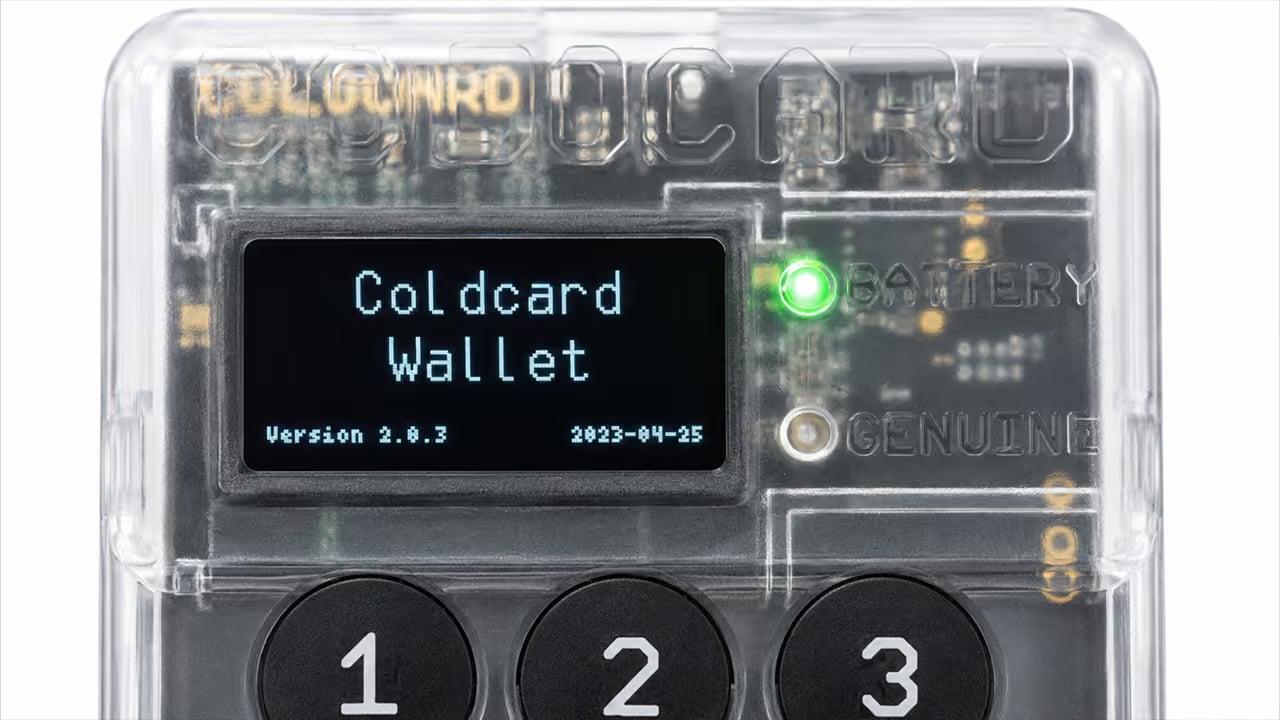
The distinction highlights the difference between Bitcoin’s decentralized protocol and third-party software used to generate, store, and protect private keys controlling individual holdings. Coldcard’s security advisory on reduced seed-generation entropy described insufficient randomness during seed creation, leaving certain recovery phrases easier to calculate than users expected.
A Wallet Failure With Broader Investor Consequences
Coldcard manufacturer Coinkite announced corrected firmware after identifying reduced entropy, a measurement of unpredictability, in seeds generated by several affected device models. Coldcard’s firmware changelog for the limited-entropy hotfix detailed Mk3 seeds may have contained roughly 40 bits of entropy, while later models may have produced about 72 bits, compared with the intended 128-bit target.
Public blockchain tracking indicates the scale of the incident has continued expanding as additional affected wallets are identified. An analysis of the Coldcard exploit and affected wallets explained how attackers exploited weak seed entropy, identified the affected device generations, and outlined why users with vulnerable recovery phrases should migrate funds to newly generated wallets.
A Coldcard Sweep Watch dashboard showed at least 1,360 BTC, valued at approximately $85.76 million using its reference price, as swept from identified wallet clusters. The dashboard describes that figure as a verified minimum rather than the total amount potentially compromised.
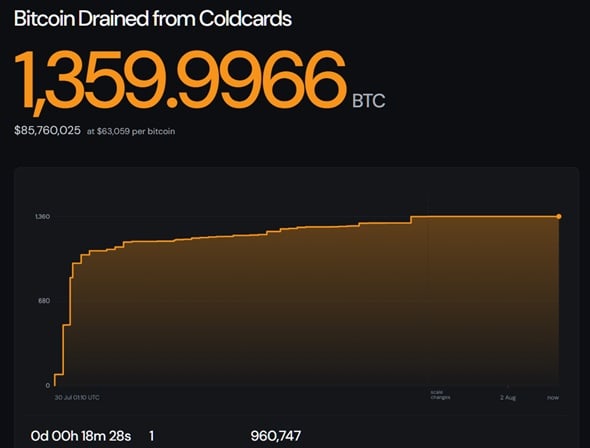
The growing verified total illustrates how a flaw in trusted self-custody hardware can evolve into a broader confidence shock for bitcoin investors, even while Bitcoin’s network continues operating normally.
Security Fear Lands in a Bearish Market
Already weakened cryptocurrency sentiment gives security incidents greater power to influence investor behavior, particularly when uncertainty spreads faster than verified technical information. Pompliano characterized the event as equivalent to throwing a match on gasoline, predicting more anger, internal disputes, and misplaced blame across the industry before sentiment eventually recovers.
He also encouraged affected users to focus on recovery rather than irreversible losses, while urging the Bitcoin community to counter misinformation with accurate technical facts instead of emotional reactions.
Market anxiety can also blur distinctions among protocol risks, custody failures, exchange collapses, and individual security mistakes, although each creates different exposures. Investors evaluating the Coldcard incident must distinguish Bitcoin’s operational integrity from vulnerabilities introduced by products controlling access to bitcoin holdings.
Institutional market observers have outlined possible BTC price recovery paths involving improving liquidity, policy developments, and renewed investor demand, while recognizing persistent bearish pressure. Grayscale’s analysis of two potential paths out of the bitcoin bear market described competing routes out of the downturn, placing security-driven fear within a market already searching for a durable catalyst and clearer direction.
Coinkite advises affected owners to install corrected firmware, generate entirely new seeds, verify receiving addresses, and migrate funds using newly created recovery phrases. Updating firmware alone does not strengthen previously generated seeds, making wallet migration the primary mitigation for users whose recovery phrases remain exposed.