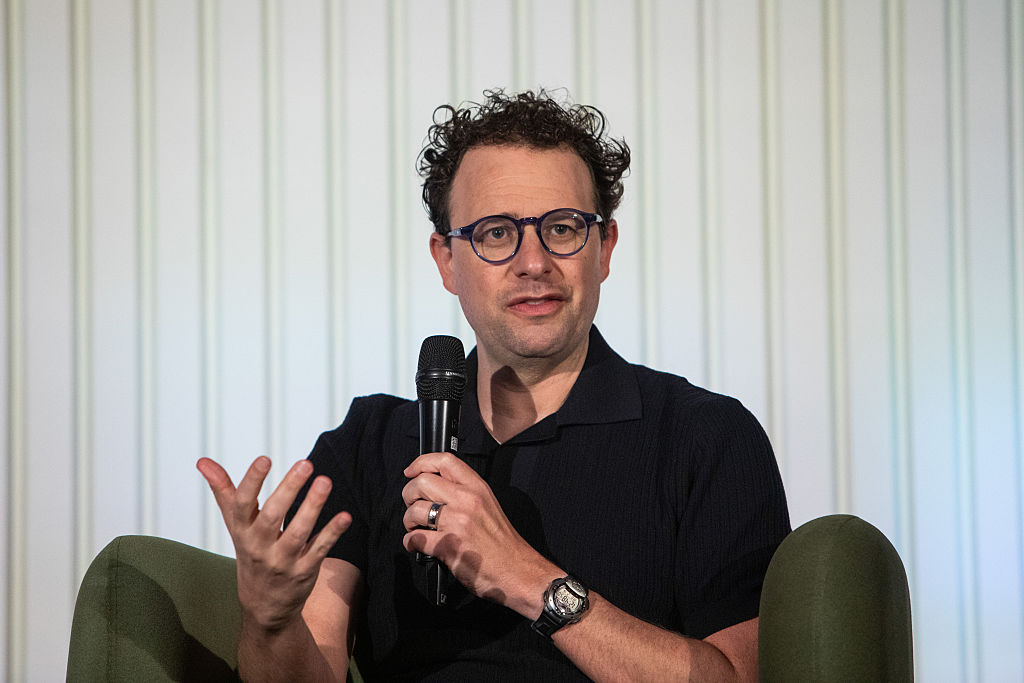
Anthropic CEO Dario Amodei recently pushed back against the idea that he’s been painting an overly pessimistic picture of artificial intelligence and how it might shape the future.
Amodei’s comments came in response to investor Gavin Baker, who argued — both on the All-In podcast and on X — that Amodei’s warnings about the dangers of AI have helped to fuel a backlash in the United States, particularly against data centers.
Claiming that Amodei has “lost the argument” when it comes to AI regulation (Anthropic has advocated for some regulations, including a California bill that imposes transparency requirements on large AI companies), and given that “he is about to be the CEO of one of the most important companies in the world,” Baker wrote, “I respectfully think he should make an effort to be a more positive advocate for his own industry.”
Baker is far from the only one arguing that AI skepticism and even government crackdowns are a natural response to the dire warnings of some AI executives. But in a post of his own, Amodei disagreed with the idea that his “messaging has been disproportionately negative.” Instead, he said that his writing has been “about equally balanced between risks and benefits,” and that he wrote his essay “Machines of Loving Grace” because he “didn’t feel the AI industry was painting an inspiring enough picture of how the technology could radically transform the world for the better.”
Nonetheless, Amodei acknowledged that “the public has a negative view of AI” and he agreed that “this is a big problem.” Where he disagreed was with the idea that this negativity is “primarily caused” by Amodei “or any other AI leader warning about AI’s risks.”
“I think it is fundamentally a crisis of trust,” Amodei said. “I think that ordinary people don’t trust companies, governments, or the tech industry and always suspect that we are cooking up some new way to screw them over.”
Indeed, “trust” is a word that often comes up in headlines about OpenAI CEO Sam Altman, and is apparently an issue for other AI CEOs like Amodei, too. In Amodei’s telling, however, this is a crisis that’s been decades in the making, with the AI backlash “just the latest iteration of it.”
“I think by far the most accurate criticism of AI companies including Anthropic is that we haven’t yet delivered on our big promises to benefit the world,” Amodei said. “That is totally on us, and I think it’s the criticism you should be making, instead of all this stuff about messaging and marketing.”
Put another way, he said promising that AI will cure cancer is “more a cliche than it is inspiring”; what would actually change people’s opinions of AI would be “actually curing cancer.”
As for regulation, Amodei argued that Baker was painting “a false choice” between distributing AI widely without regulation, or concentrating the technology in the hands of a few companies through regulation.
“I know that there’s a sort of Silicon Valley shorthand where regulation = regulatory capture = concentration of power, but I’ve always found this to be an overly simplified picture of the world,” Amodei said. “Many people outside this bubble think of regulation as something that constrains corporate power and benefits ordinary people.”
Amodei added that he doesn’t “necessarily agree with that perspective either,” but he said that’s “why Anthropic has always made its policy proposals very carefully.”
“We try very hard to make proposals that disadvantage (slow down) frontier AI companies while *advantaging* smaller competitors,” he said.
Why make those proposals at all? Amodei said that in his view, “AI is *structurally* a technology that tends to concentrate power” and that “open-weights do help some with this but are nowhere near a sufficient solution because they simply shift the concentration somewhat to those with the most compute and chip.”
“By contrast I think the right ‘rules of the road’ can simultaneously (a) address AI’s cyber/bio/alignment risks, (b) institutionally constrain the power of the frontier AI companies, and (c) leave room for open-weights models while also addressing the specific risks that they bring,” he said.
This post has been updated to include more quotes from Amodei’s posts, including those around open weights.
When you purchase through links in our articles, we may earn a small commission. This doesn’t affect our editorial independence.