Key Takeaways
- Bitcoin dropped 1% on Thursday, retreating under its $1.3 trillion market cap after failing to hold $65,000.
- Fed policy and geopolitical risks have forced crypto to trade closely with the macro liquidity cycle.
- Global Settlement CEO Ryan Kirkley warns traders not to expect a straight line to easier monetary policy.
Volatile Intraday Trading
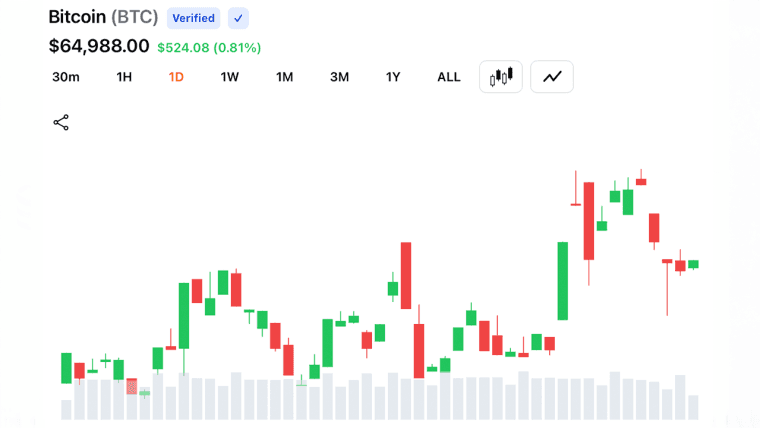
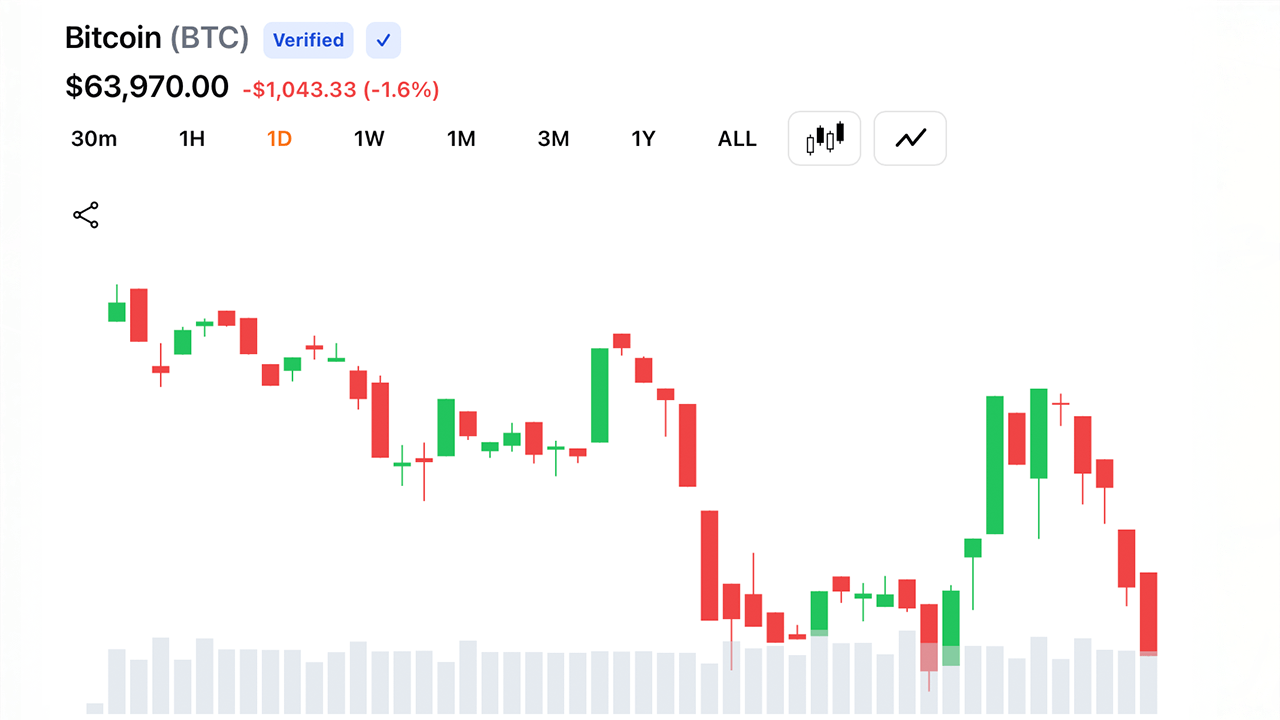
On Thursday, bitcoin failed to maintain an uptrend that had seen it log significant gains in the prior 48 hours. Market data shows the cryptocurrency gradually retreated from the $65,000 threshold it had surpassed following the release of the U.S. producer price index on July 15. The descent initially halted after bitcoin dropped to just over $64,400.
A subsequent push toward $65,000 stalled near $64,900 around 1:30 a.m. EST, triggering a sharp drop to $63,900 before a brief relief rally nudged the price back above $64,000. By 8:44 a.m., bitcoin plunged to a daily low of $63,808, though a swift rebound soon lifted it back past $64,700.
At the time of writing (1:13 p.m. EST), bitcoin was trading at slightly over $64,200, representing a 1% daily loss. This retreat dragged the cryptocurrency’s market capitalization back below the $1.3 trillion mark.
While the release of U.S. inflation data on Tuesday and Wednesday lifted global markets, a lack of subsequent positive headlines and continuing hostilities in the Middle East demonstrated how investors may have moved too quickly to price in an easier policy path, while overlooking the structural changes reshaping financial markets.
According to Ryan Kirkley, co-founder and CEO of Global Settlement, the June consumer price index (CPI) print might have bought the Federal Reserve time but did not end the inflation fight.
“The Fed has been handed time, not an exit. The case for an immediate rate hike has weakened, but the inflation fight is not over. Anyone pricing a straight line from this CPI report to easier policy is ignoring the geopolitical risk already building beneath the data,” Kirkley said.
The Crypto-Macro Liquidity Link
Turning to bitcoin specifically, Kirkley argued the asset’s reaction was predictable, noting it responded as traders dialled back expectations for a near-term rate hike. In his view, “that is not bitcoin separating from traditional finance. It confirms how closely crypto now trades with the macro liquidity cycle.”
When inflation cools and rate expectations fall, financial conditions loosen, prompting investors to increase risk exposure. Crypto often reacts quickly because it trades continuously, carries significant leverage, and allows capital to move in and out without waiting for traditional market hours.
“The same dynamic works in reverse. When yields rise or the dollar strengthens, leveraged positions unwind and crypto falls faster than more defensive assets,” Kirkley said in a statement shared with Bitcoin.com News.
Institutional participation has reinforced this relationship, as digital assets now respond to the same CPI releases, Treasury moves, oil shocks, and central bank signals as equities and currencies. While institutional capital has brought greater legitimacy, it has also tied crypto more closely to the traditional financial cycle.
“ Crypto is no longer operating on a separate set of rules. It trades with global liquidity, and pretending otherwise does not change that,” Kirkley said.