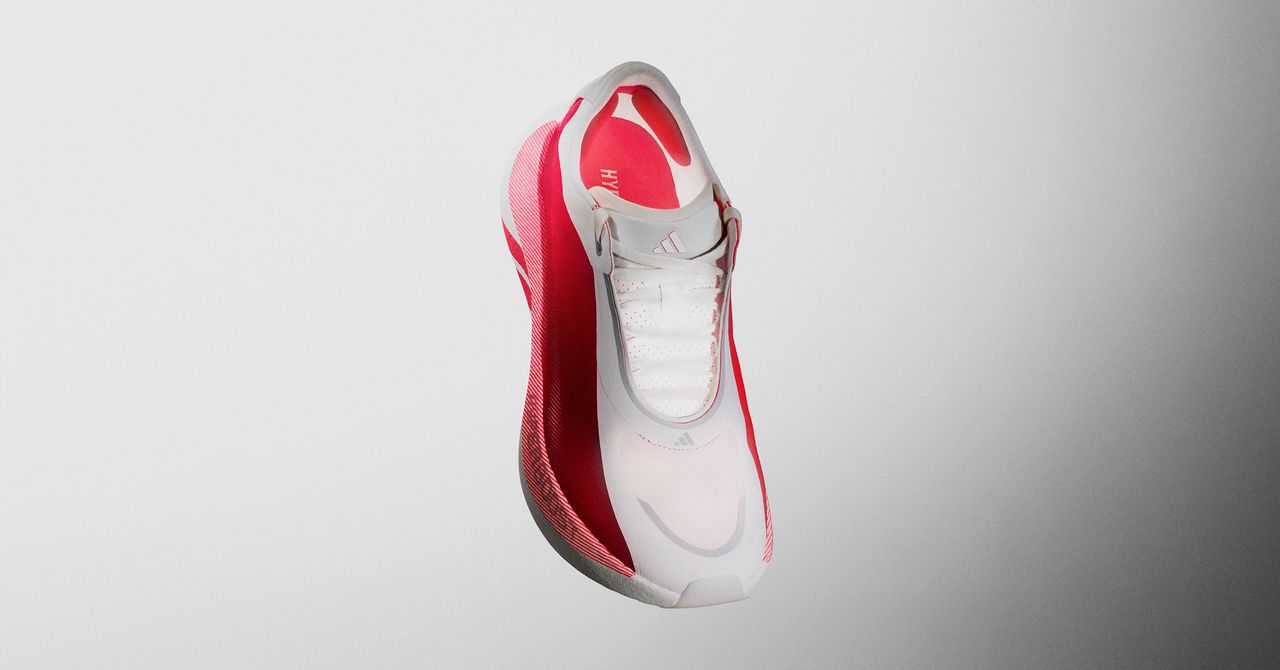
Some running shoes swagger into town, stirring up hype, making big promises. Like the Nike Vaporfly or the Puma Fast-R Nitro 3 Elite, the Adidas Hyperboost Edge ($200) promises to usher in “a new era of road running,” with brand-new supershoe DNA—a giant stack of new super foam, lightweight uppers, and a bold new design.


It certainly looks a lot different than the shoes we might have laced up just a few years back. But what’s really different about these so-called super trainers like the Hyperboost Edge? Here, I’ll break down what’s going on inside the new wave of high-performance running shoes and if they’ll really make you faster.
If you’re not really worried about cutting a minute or two off your mile, don’t forget to check out the rest of our outdoor buying guides, including the Best Running Shoes, the Best Gravel Running Shoes, and the Best Running Socks.
What Is a Super Trainer?
The Adidas Hyperboost Edge joins a growing lineup of running shoes that attempt to translate the high tech of racing “super shoes” into “super trainers,” delivering some of the speed and feel of a race shoe into a more usable everyday package.
The super trainer recipe often pairs a big stack of high-energy, lightweight super foam with a nylon or carbon plate and weight-saving race-style uppers. There’s also a growing trend for plate-free super trainers in response to fears that racking up too many miles in carbon-plated shoes raises your injury risk. But more on that in a mo.
The Hyperboost Edge is Adidas’ first non-plated super trainer and follows in the max-stack footsteps of shoes like the Asics Megablast and the Saucony Endorphin Azura—surprisingly versatile all-round running shoes that can cover most of your weekly miles. This is the shoe sandwich that lets them protect your legs while helping you run farther and faster.
The Midsole Magic
Carbon plates often grab the headlines, but the midsole foam really creates the super shoe magic. When I started running in 2009, the main midsole material was still ethylene-vinyl acetate (EVA), which has been used since the late 1970s and is still used today. EVA is cushioned (to a point), stable, durable, and cheap. But foam technology has bounded on. Gas-infused, supercritical foams, like the polyether block amide (PEBA) Hyperboost Pro in the Edge, are now all the buzz.
Supercritical foams are made by injecting a gas, like CO₂ or nitrogen, under high pressure into the midsole while it’s forming in the mold. In a supercritical state, the gas is not liquid, nor gas, but both at once. When the pressure is reduced, the gas expands inside the foam to create bubbles or cells that give the foam its lighter, bouncier properties.